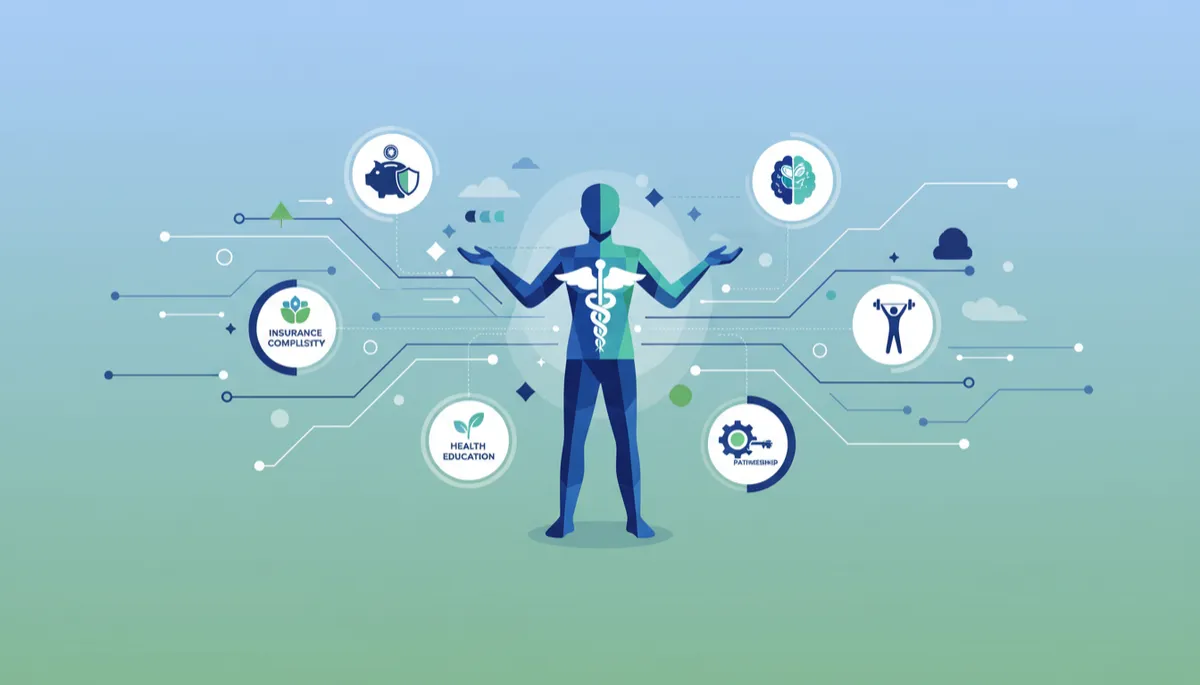
Is the Healthcare System Broken or Just Limited?
Healthcare System, Patient Ownership, Health Education, Insurance Complexity, Preventive Care
Is the Healthcare System Really Broken — Or Is It Just Limited?
As a senior software engineer, I’m used to debugging complex systems. When I look at the modern Healthcare System, I don’t just see something “broken” — I see something working exactly as it was designed, but for a very narrow use case: short-term, reactionary care. If you want long-term health, resilience, and pain-free movement, you’re asking a bug-tracking tool to run your entire product roadmap. It’s the wrong system for the job.
1. The Healthcare System Is Designed for Reactionary Care
In software, we design systems around a primary use case. The primary use case of traditional healthcare is “fix the acute problem now” — heart attack, fracture, infection, post-op rehab. For that, the system is powerful and often life-saving. But when you ask it for Preventive Care, sustainable movement, or habit change, it behaves like a legacy monolith being forced to run modern, real-time analytics: slow, clunky, and misaligned with your needs.
📌 Key Takeaway: The system isn’t primarily built to keep you thriving; it’s built to keep you alive when things go wrong.
2. Health Insurance vs. Providers: Two Different Systems
We often blame “the Healthcare System” as if it’s one codebase. In reality, it’s at least two major subsystems with very different incentives:
Insurance: Optimized to limit risk and payouts. Think of it as a strict rate-limiter with complex conditionals and a lot of
if/elsechecks around what gets approved.Providers: Doctors, PTs, nurses — humans who usually want to help but must operate inside the constraints of that insurance “API”: visit length, approved codes, and reimbursable services.
When you expect your insurance to fund deep lifestyle coaching, long-term movement training, or proactive habit-building, you’re effectively calling an endpoint that was never implemented. The response will always be some version of “not covered” or “short-term only.”
def insurance_coverage(request_type: str) -> str:
    if request_type == "emergency":
        return "approved"
    if request_type == "surgery":
        return "approved"
    if request_type == "short_term_rehab":
        return "partially_approved"
    if request_type in ["habit_coaching", "longevity", "preventive_movement"]:
        return "denied_not_medically_necessary"
    return "denied_unknown_request"
Revolution Rehab intentionally operates outside this function. As a cash-based wellness practice, they’re not limited to what this “coverage function” allows — which is exactly why they can focus on longevity and independence instead of quick fixes.
3. Why the System Struggles With Long-Term Health and Lifestyle Change
Long-term health is a behavioral and environmental problem, not just a medical one. It’s about how you move, sit, sleep, train, and recover — every day, for years. Traditional healthcare visits are short, episodic, and focused on symptoms, not systems. There’s no space for:
Iterative habit-building and feedback loops
Deep movement assessments and progressive programming
Coaching that evolves as your life and goals change
That’s why offerings like Revolution Rehab’s 6- and 10-week programs and the Longevity Program feel so different: they’re structured like a long-running service, not a one-off script. You get assessments, updates, and coaching — the equivalent of continuous deployment for your body, not a single hotfix patch after you crash.
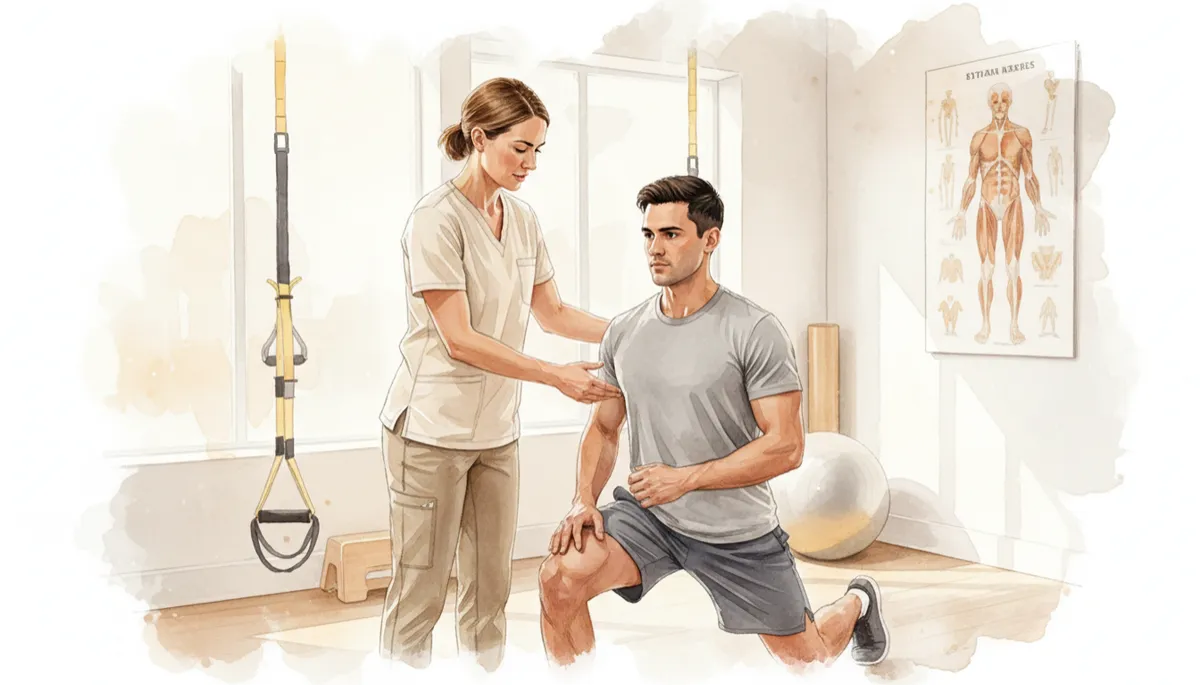
Structured, coached movement progressions outperform one-off symptom-based treatments over time.
4. Patient Ownership: Becoming the Engineer of Your Own Health
In engineering, we don’t wait for someone else to fix our bugs. We instrument, log, test, and iterate. Your health deserves the same mindset. Patient Ownership means you are the primary maintainer of the “project” that is your body. Providers are expert consultants, not the product owner of your life.
💡 Pro Tip: Treat every appointment as a code review. Ask questions, take notes, and leave with clear next steps you understand and can execute.
This is baked into Revolution Rehab’s model: programs start more hands-on and intentionally progress to self-reliance and exercise prescription. The goal isn’t dependency; it’s graduation. You leave with the tools, not a permanent ticket in the support queue.
5. The Structural Mismatch in Health Education
Most of us were never taught how to manage our bodies the way we were taught algebra or programming. Health Education is treated as a side quest, not a core module. The result? Smart, capable people who can architect distributed systems but feel lost navigating Insurance Complexity or basic movement principles.
Revolution Rehab flips this: education is the product. Workshops, Wellness Club, and one-on-one sessions are all designed to teach you how your body works, not just “fix” it. That aligns perfectly with growth-minded, self-improvement-oriented people who don’t want to be stuck in a black box system anymore.
6. Actionable Steps to Reclaim Your Health (Engineer-Style)
If you’re ready to step beyond reactionary care, here’s a simple, engineer-friendly framework you can start today:
Instrument your system: Track pain levels, sleep, steps, desk time, and training. Think of it as logging — you can’t optimize what you don’t measure.
Define your “health spec”: What does success look like? Playing with your kids pain-free? Running a 10K? Lifting without fear? Write it down like requirements.
Refactor slowly: Change one or two habits at a time — a 10-minute walk after work, a mobility block before sitting, one coached session per week.
Bring in expert reviewers: Work with a team that prioritizes education and independence, not endless visits. This is exactly what Revolution Rehab’s Longevity Program and Recovery Session Bundles are designed for.
from dataclasses import dataclass

@dataclass
class HealthState:
    pain_score: int          # 0-10
    steps_per_day: int
    sleep_hours: float
    weekly_training_sessions: int

def small_refactor(state: HealthState) -> HealthState:
    return HealthState(
        pain_score=max(state.pain_score - 1, 0),
        steps_per_day=state.steps_per_day + 1000,
        sleep_hours=min(state.sleep_hours + 0.5, 9.0),
        weekly_training_sessions=state.weekly_training_sessions + 1,
    )

current = HealthState(pain_score=6, steps_per_day=3000, sleep_hours=6.0, weekly_training_sessions=0)
next_sprint = small_refactor(current)
print(next_sprint)
You don’t need a perfect overhaul. You need consistent, incremental upgrades — guided by people who understand movement, behavior, and your actual life constraints.
Step Outside the Limitations — Without Going It Alone
The Healthcare System isn’t entirely broken — it’s just limited and misaligned with your long-term goals. If you’re a health-conscious, growth-minded adult who’s tired of patch fixes and dependency, it’s time to own the repo of your health and bring in the right partners.
At Revolution Rehab, the entire model is built around empowerment, education, and community — from 6- and 10-week rehab and programming, to the Longevity Program and Recovery Session Bundles, to workshops that demystify movement and wellness. You’re not just treated; you’re taught, supported, and set up to thrive without dependency on insurance or endless appointments.
Ready to start? Schedule a 1-hour evaluation with Dr. Kinch at therevolutionrehab.com. Click “Book Your Evaluation,” plug into their GoHighLevel-powered scheduling, and take the first intentional step toward long-term, self-owned health today.