Preventing Tennis Elbow: Break the Pain Cycle
Injury Prevention, Tennis Elbow, Pickleball Elbow
Tennis Elbow (Pickleball Elbow): Why It Keeps Coming Back — And How to Break the Cycle
If your “tennis elbow” or “pickleball elbow” disappears for a few weeks only to flare right back up when you return to the court, you are not broken — you are underprepared. At Revolution Rehab, we see this pattern every season, and the good news is it’s fixable with the right strategy, not more endless treatment.
How Tennis Elbow (Pickleball Elbow) Really Develops
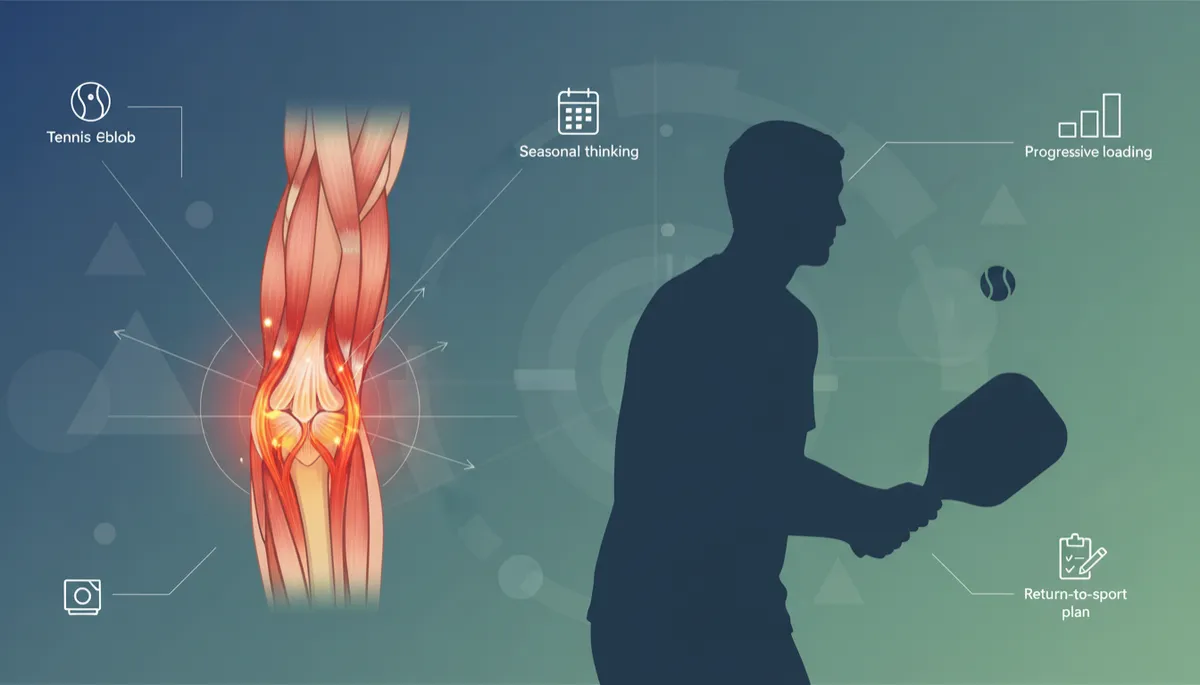
Despite the name, tennis elbow isn’t just a “tennis” or “pickleball” problem. It’s an overload problem at the outside of the elbow, where the forearm tendons attach. Over time, those tendons are asked to do more work than they are currently prepared to handle — gripping paddles, typing, carrying kids, home projects, weekend tournaments — and they start to protest.
This usually doesn’t happen from one “wrong” swing. It develops from a combination of:
Sudden spikes in activity (you go from 1 match a week to 4)
Repetitive gripping and wrist extension without enough recovery
Weak or undertrained forearm, shoulder, and upper back muscles that force the elbow tendons to “do it all”
Over time, the tendon tissue becomes irritated and sensitive. Without a plan to rebuild its capacity, it stays vulnerable — which is why it seems to “come out of nowhere” every season.
Why Typical Treatments Often Fail (or Only Help Short-Term)
Many people bounce between braces, ice, rest, massage, injections, and even endless passive treatments. These can temporarily calm symptoms, but they rarely answer the key question: Can your tendon actually handle what you’re asking it to do?
Rest alone reduces pain, but it also reduces capacity. When you jump back into sport at full speed, the tendon is less prepared than before.
Braces and straps can offload the area temporarily, but they don’t make you stronger or more resilient.
Passive treatments (needles, scraping, machines) may change how the area feels, but they don’t teach the tendon to tolerate real-life forces.
📌 Key Takeaway: If your treatment plan doesn’t include a clear, progressive loading program for your forearm and shoulder, you’re managing symptoms, not solving the problem.
Triggers That Keep Your Elbow Irritated
Identifying your personal triggers is a big step toward breaking the flare-up cycle. Common ones we see at Revolution Rehab include:
Back-to-back match days without recovery or strength work
Changing to a heavier paddle or tighter grip without gradually adapting
Long computer or phone use with poor wrist positioning, then heading straight to the court
“All-or-nothing” training — weeks off, then a tournament weekend
💡 Pro Tip: Start a simple trigger log. For two weeks, jot down what you did on days your elbow feels worse — duration of play, intensity, equipment changes, work hours, and sleep. Patterns show up quickly.
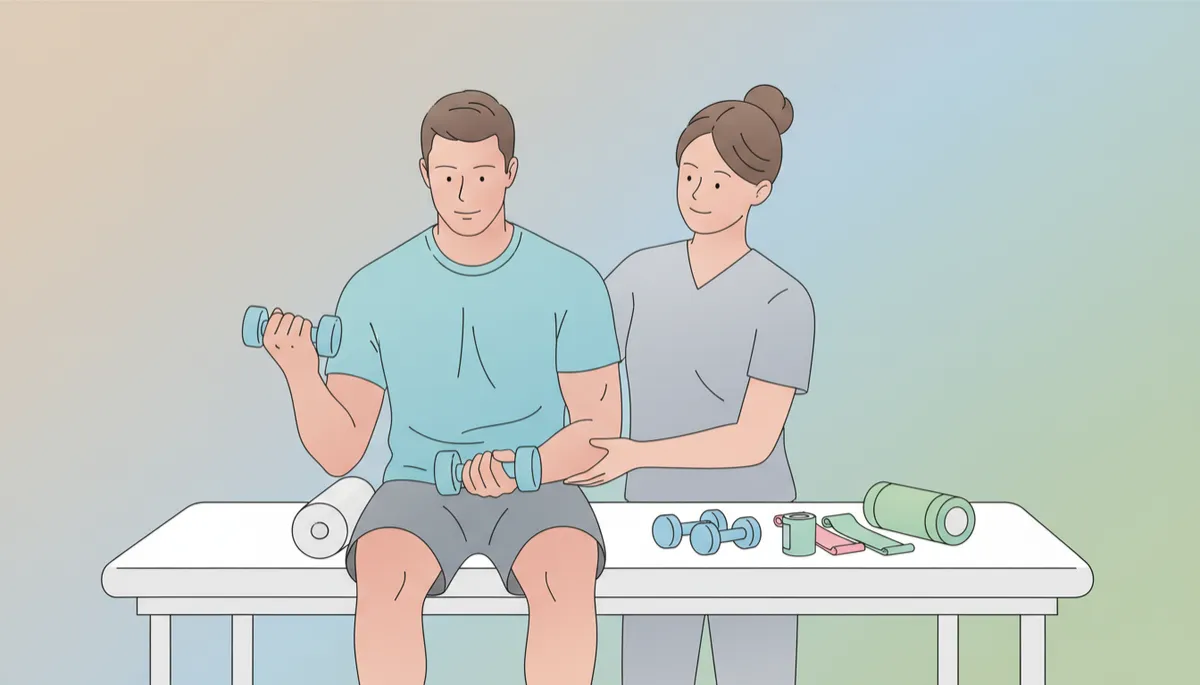
Slow, progressive strength work turns a sensitive elbow into a resilient one.
The Importance of Progressive Loading (Not Just “Exercise”)
Tendons respond best to gradual, consistent loading. That means we add stress in a controlled way so the tissue adapts and gets stronger instead of irritated. At Revolution Rehab, we think in phases:
Calm it down: Modify the activities that spike pain, use isometrics (holding positions) to reduce sensitivity, and keep you moving without overloading.
Build it up: Progress to slow, heavy-ish wrist and grip strengthening, then add shoulder, scapular, and trunk work so the elbow isn’t doing all the work.
Stress it smart: Introduce faster, more sport-like movements — serves, volleys, overheads — in a controlled and planned way, not all at once.
This is progressive loading. It’s not random exercises from social media — it’s a structured progression that matches your current capacity and your goals.
Seasonal Thinking: Train for the Season You Want, Not Just the Week You’re In
Most flare-ups happen because the body is surprised by a new season: spring leagues, summer tournaments, fall indoor play. Your calendar changes overnight, but your tissues didn’t get the memo. That’s where seasonal thinking comes in.
Off-season: Focus on strength, mobility, and capacity building. This is where a Longevity-style program shines — fewer matches, more preparation.
Pre-season (4–6 weeks out): Gradually add more hitting sessions, introduce faster, more specific drills, and fine-tune your workload so your elbow is used to the volume before the schedule ramps up.
In-season: Maintain strength with 1–2 short sessions per week, monitor triggers, and adjust volume when life stress, sleep, or work demands spike.
Think of your elbow like a savings account. Off-season is when you deposit strength and capacity. In-season is when you spend it. If you don’t save, every match is an overdraft fee.
Building a Smart Return-to-Sport Plan
A proper return-to-sport plan connects your rehab exercises to your real game. Here’s a simple framework we use with active adults at Revolution Rehab:
Set clear boundaries: Decide your starting point — for example, 30 minutes of light hitting, no serves, pain no higher than 3/10 during and back to baseline by the next morning.
Progress one variable at a time: Either increase time, intensity, or frequency — not all three at once. For example, add 10 minutes of play every 1–2 weeks if symptoms stay stable.
Keep strength work non-negotiable: Maintain your forearm and shoulder program 2–3 days per week, even when you feel “back to normal.”
Use pain as information, not a verdict: Mild soreness that settles within 24 hours is usually acceptable. Sharp spikes that linger are a sign to dial back one step, not to quit entirely.
Take-Home Tips for Managing Tennis or Pickleball Elbow
Stop chasing quick fixes. If something only makes you feel better for a day or two, it’s not your long-term solution.
Commit to 8–12 weeks of progressive loading. Tendons adapt slowly. Give them the time and consistency they deserve.
Train more than just the elbow. Include grip, wrist, shoulder, upper back, and trunk strength so your whole arm team shares the workload.
Plan your season. Don’t go from zero to tournament weekend. Map out 4–6 weeks of build-up before your heaviest play.
Track your triggers and wins. A simple notebook or notes app can help you see what actually helps — and what quietly sabotages you.
Ready to Stop the Flare-Up Cycle?
You don’t need another year of on-and-off elbow pain and last-minute cancellations. You need a clear, education-driven plan that respects your goals, your schedule, and your body’s capacity. That’s exactly what we build with our clients at Revolution Rehab — from focused 6–10 week rehab programs to our Longevity Program for athletes who want to keep playing for decades, not just this season.
If you’re ready to move beyond temporary relief and actually prepare your tissues for the sport you love, it’s time to take the next step.
Call to Action: Schedule a 1-hour evaluation with Dr. Kinch at Revolution Rehab to uncover your movement limitations, understand your specific elbow triggers, and leave with a clear return-to-sport plan. Visit therevolutionrehab.com, click “Book Your Evaluation,” and use our seamless GoHighLevel-powered system to get started on your path to long-term, independent health.