Physical Therapy, Grand Rapids MI.
Dominate the Court Pain-Free
Data-driven tools to resolve shoulder, elbow, and knee pain, build rotational power, and keep you playing every match without setbacks.
Phone: 616-344-4469
Built For Court Athletes
We help tennis and pickleball players in Grand Rapids fix lingering injuries, restore court mobility, and build lasting tissue durability.

Resolve Pain
Understand what's contributing to your pain and begin moving comfortably again.

Rebuild Capacity
Develop the strength, mobility, and resilience your body needs.

Experience Life
Return to the activities you love with greater confidence.
Our Story, Your Path
Rebuild Your Court Capacity
Court sports require rapid acceleration, sharp lateral cuts, and overhead rotational force. We fix root movement limitations so your joints and tendons absorb high-speed stress effortlessly.
Rotational & Lateral Mechanics
Address hip and ankle restrictions that force your lower back and knees to take the hit during fast lateral cuts.
Overhead Joint Resilience
Build structural durability in your shoulder girdle and elbow tendons to handle serve velocity and overhead smashes.
10th
Experience
Your Benefits
Solutions to your Court struggles
Pickleball and tennis players are notorious for using straps and quick fixes to keep them playing on the court. This is can be helpful but have more opportunities to get lasting relief.
Nagging Joint & Tendon Pain
Nagging forearm or rotator cuff inflammation flared up from repetitive drives, dinks, and overhead serves.
Wasted Gimmicks & Quick Fixes
Relying on elbow straps, cortisone shots, or ice that numb the pain but leave the underlying tissue weak.
Loss Of Identity
Sitting out weekend leagues, playing guarded, and watching your rating drop while resting on the sidelines.
Fear of Sudden Setbacks
Second-guessing fast direction changes or holding back on serves out of fear your joint will give out.
Beyond The Clinic
Tendon & Joint Loading
Fast-twitch sports put massive deceleration stress on tendons and ligaments. We structure your load so connective tissue adapts and strengthens under high velocities.
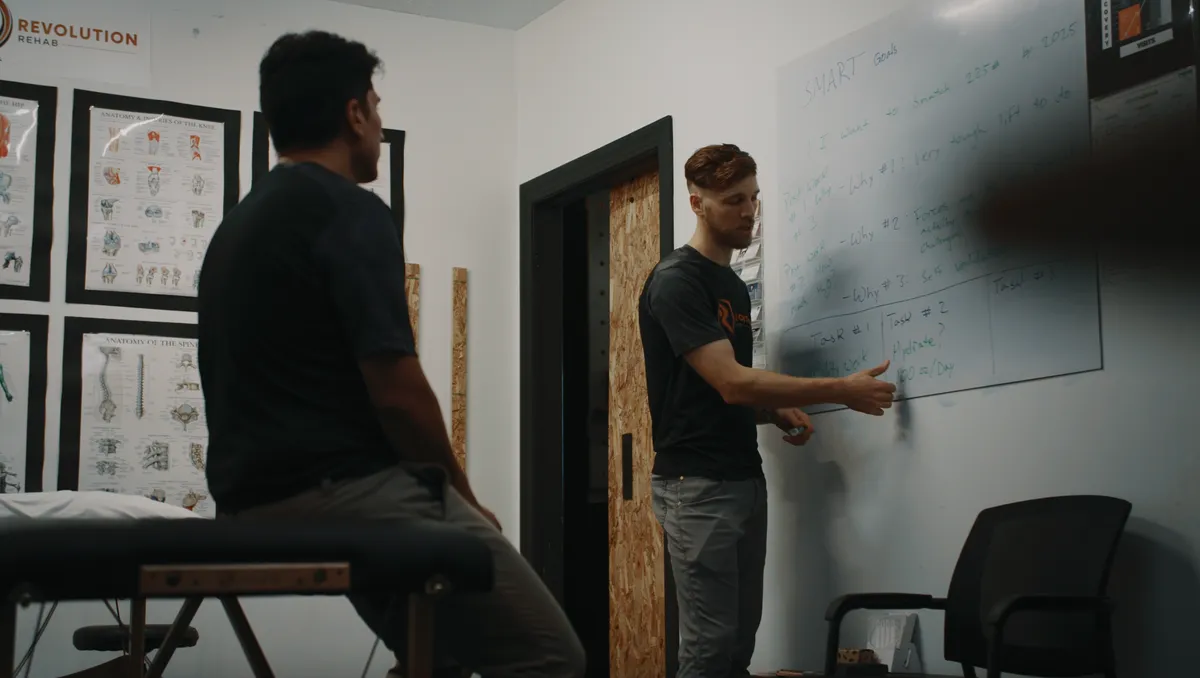
Connective Tissue Load Management
Progressive loading tailored to help tendons handle sudden decelerations and hard lateral stops.
Positional Body Awareness
Master joint centration to distribute force across your whole body instead of overloading single joints.
Testimonials
What Clients Say

"I thought elbow pain meant I had to stop playing pickleball. Tyler fixed my shoulder mechanics, rebuilt my forearm capacity, and got me back to tournament play pain-free."
"Instead of giving me generic exercises, Tyler treated my body for the exact rotational demands of tennis. I’m serving harder and moving better than I have in years."
“Their sessions helped me find calm and clarity. Each class brings peace and strength I carry into daily life. I’ve never felt more connected to my body and mind.”
Jenny
Blogger
Treatment & Recovery Techniques
Enhance Your Capacity
Treatment & recovery techniques can be used for acute pain or recovery tools. Reach out to learn more about how we use the below techniques to help you heal and stay on the court!
Dry Needling
Targeted insertion of fine needles to release tight muscle knots. Learn More...
Cupping
Suction-based therapy to reduce tension and tissue mobility. Learn More...
Blood Flow Restriction
Low-load strength training that maximizes muscle growth and recovery. Learn More...
IASTM
Specialized instrument scraping to break down scar tissue and restriction. Learn More...
Joint Mobilization
Controlled, passive joint movements aimed at restoring smooth, pain-free motion. Learn More...
Manual Therapy
Hands-on joint and tissue techniques designed to reduce pain quickly. Learn More...
FAQs
Answer Of Some PT Questions
How can I fix tennis or pickleball elbow without taking months off playing?
Complete rest calms elbow inflammation temporarily, but it reduces tendon capacity—meaning the pain returns the moment you hit a hard forehand or serve again. We fix forearm and wrist tendinopathy by using progressive eccentric loading to rebuild tendon density while optimizing shoulder and trunk rotation. This takes the excess mechanical workload off your elbow so you can stay on the court while healing.
Why does my shoulder hurt when I hit overhead serves or high smash shots?
Overhead shoulder pain in racquet and paddle sports usually stems from restricted thoracic spine extension or poor rotator cuff deceleration capacity. When your upper back can't extend or rotate fully, your shoulder joint is forced to pinch to create power. Restoring t-spine mobility and strengthening the back of your shoulder allows you to generate serve velocity without impinging the joint.
How do I prevent sudden calf pulls or Achilles tendonitis from hard court stops?
Pickleball and tennis require rapid acceleration and sudden deceleration, which put extreme tensile stress on the calf-Achilles complex. Preventing tears and chronic stiffness requires building ankle dorsiflexion mobility and progressive heavy-slow resistance in the soleus and gastrocnemius muscles. Strengthening these tissues prepares your lower legs to absorb high-velocity court impacts safely.
Why aren't elbow straps, knee braces, or anti-inflammatories fixing my court pain?
Braces, straps, and pain relievers mask symptoms and temporarily alter force distribution, but they do not increase the structural capacity of your muscles, tendons, or joints. Once you play a high-intensity match, the underlying mechanical overload remains. We use hands-on care to calm initial joint irritation, then train your body to handle the explosive forces required by court sports.
How can active tennis and pickleball players stay competitive and injury-free long-term?
Long-term court durability requires balancing game play with targeted rotational mobility, deceleration loading, and joint stability. Playing matches alone isn't enough to keep your body resilient against repetitive impact. We give court athletes structured capacity routines that preserve speed, protect joint cartilage, and keep you playing in weekend leagues for decades.
What causes knee pain during sharp lateral cuts, and how can I fix it?
Lateral knee pain on the court is usually a hip control and foot stability issue rather than a structural knee problem. If your glutes and ankle stabilizers cannot control dynamic knee alignment during a hard split-step or lateral plant, the knee joint absorbs excessive twisting force. Building multi-directional hip capacity and foot stability protects your knees during fast-paced points.
Stay connected and keep your wellness journey on track with our expert physical therapist. Subscribe for the latest updates, exclusive offers, and tips. Join our community and develop the capacity to experience life!
Pages
Information

Address
4981 Plainfield Avenue Northeast Suite D, Grand Rapids MI 49525

Call Us
(616) 344-4469


Fax
(616) 841-9970


© 2026 Revolution Rehab - All Rights Reserved | Healthcare Disclaimer | HIPAA Privacy Policy | Privacy Policy | Terms Of Service | Accessibility Statement | Anti-Discrimination | Good Faith Estimate | AI-Generated Content Disclaimer | XMLSitemap